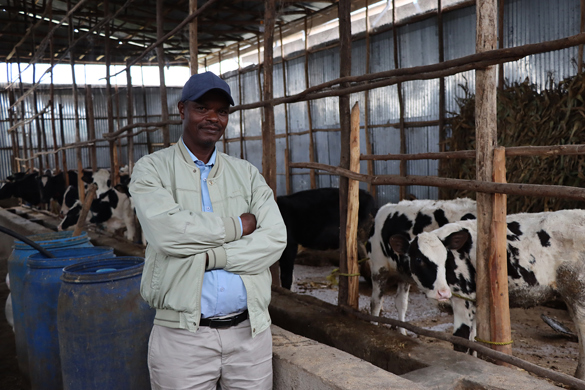

ABS is working with partners to assist farmers and livestock keepers in Ethiopia.
Ethiopian dairy farmers face challenges with low yielding cows, averaging fewer than 3 litres of milk per day. Genetics can help those farmers to produce more milk, sell better produce of a higher standard, and significantly contribute to community wellbeing. In addition, with a shortage of beef processing infrastructures in-country, male dairy calves are often not profitable and are left to graze nomadically, so farmers are eager to produce female rather than male calves.
ABS is helping them achieve this by providing ABS sexed semen, Sexcel®, which can achieve a 95% conception rate relative to conventional semen (based on ABS’ Real World Data®), with around 90% of these offspring being female. We also provide in-country training, covering general cow management, reproduction and the benefits of using artificial insemination.
The project is delivering results. Farmers across Ethiopia are now using 2,000 units of sexed semen a month, a quantity that used to be spread over 18 months, and helping to enhance the country’s supply of milk.